

The truth behind Class Actions – RDO lifts the lid on dubious schemes
You've seen an advertisement or had a call out of the blue - something in itself to be wary of as your details have probably been obtained through a stolen database - and are now considering whether to join a class action against your resort developer or even exchange company. So what's the reality behind these schemes; is this just another scam, a way of obtaining money from timeshare owners under false pretences? From evidence collected by RDO's enforcement team, headed up by a former Spanish police inspector, it is becoming increasingly apparent that the majority of these schemes are bogus, their...

If you think you have been defrauded, read on….
If you have been invited to a presentation to discuss ways in which to dispose of your timeshare/ points or to join a class action scheme against your resort developer but then signed up for membership of a holiday club, we would like to hear from you. The European trade body for timeshare, *RDO (Resort Development Organisation) is currently looking into the activities of a number of holiday clubs that we believe are deliberately misleading timeshare owners and signing them up to holiday clubs, often with the promise that any money paid will be recouped through a cashback scheme. To submit a...

Progress slow on Europe-wide implementation of new Directive
Nearly two months after the formal deadline given for the implementation of the new EU Timeshare Directive, only eleven European countries have completed the process. Work is continuing to reach the same level of consumer protection across the rest of Europe. The Directive has already been implemented in Austria, Czech Republic, Denmark, France, Germany, Greece, Malta, Netherlands, Portugal, Sweden and the UK. Luxemburg and Slovakia are expected to have new legislation approved shortly whereas other countries including Spain are lagging behind in the process and have yet to confirm when the Directive will be implemented. The new Directive aims to provide protection...
Currency losses and ash cloud lead to weak annual results for Hapimag
Hapimag maintained a stable operating income and expanded its portfolio in 2010, but couldn’t avoid a negative group annual result of -7.8 million euros, caused by factors such as the weakness of the euro against the Swiss franc and reduced occupancy as a result of the volcanic ash cloud in April 2010. While the operating income was similar to that of 2009 at 171.7 million euros, operating expenses increased to 172.6 million euros, partly because of the unfavourable exchange rate. Uncertain future prospects in some European countries, and the flight disruption caused by the volcanic ash cloud meant a reduction in...

Selling Timeshare
There will of course be situations where owners may need to dispose of their timeshare/points. However, as Timeshare is regarded as a long-term investment in holidays, as opposed to an investment in real estate, it would be unrealistic to rely on realising the original purchase price. Bear in mind that some resorts/unit sizes are far more popular than others and ; as sales depend on current supply and demand it is not always possible to guarantee a date for resale. Selling Privately If you are thinking about selling your timeshare or points, you should make a note of the following: Timeshare is not...

If You Feel You Have Been Defrauded
Contact/Attend your local police station to report the crime and to make a written statement on the official forms. This must also be typed to ensure all necessary parties can read the statement. Any documentary evidence should also be properly exhibited and attached to the statement. The statement should be translated into the language that has the jurisdiction of the crime. The statement should then be forwarded by the police to Interpol. Interpol will check the quality of the statement and that any documents attached are correctly mentioned in the statement and will then forward it to their colleagues in...

Resorting to Legal Action
Solicitors If you feel that your genuine grievances are being rejected both by the timeshare company and by your credit card issuing bank or finance company regulated by the Consumer Credit Act 1974, you could consider obtaining a fee quotation from a solicitor for handling the claim. Or you could refer the claim against your card issuing bank to the Banking Ombudsman (pamphlet available from 020-7404 9944). View list of Associate Members - Lawyers Your home insurance policy It is worth looking at your insurance policy to see if legal costs cover is included. A single call to your insurers should give you this...
Additional Rights of Redress if You Paid by Credit Card
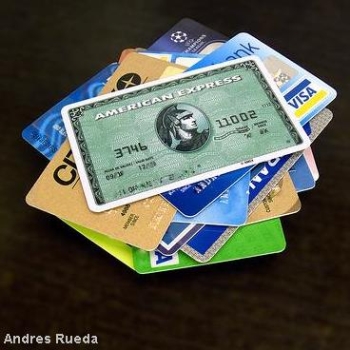
If you paid by means of a Visa credit card, you should be aware that Visa introduced a rule in November 1996 (which is not linked to any legislation) and Mastercard more recently (which is linked to the EU directive), which set out that a customer buying timeshare with a credit card is entitled to a 10-day cooling off period, irrespective of whether there is local cooling off legislation in place or not. The 10-day Visa/MasterCard cancellation and cooling-off rule is particularly relevant in areas of Europe that are not subject to the European Timeshare Directive as they are outside the...

Unhappy With Your Purchase and Now Outside the Cooling-Off Period?
If you have a complaint about a non-RDO member's sales presentation, it is best to (jointly) sign a letter of complaint and to send it recorded delivery to the timeshare resort in question rather than writing to its trustees or head office elsewhere. Set out concisely what aspect of the sales talk you now find was inaccurate, and who made the misleading statements about which you are complaining. Ask the sales director to make all necessary investigations. If you feel strongly that you have signed a purchase agreement and perhaps paid a deposit on a timeshare which was so misrepresented...

If You Decide to Cancel an Agreement
If you wish to cancel during the timeshare cancellation period, it is best to communicate this in writing by recorded delivery to the seller's office. Remember that if two people signed jointly, both should also sign the cancellation letter or formal Notice. You should give the contract number and the date on which you signed the agreement. Posting the cancellation recorded delivery relieves you of any responsibility for proving that you actually posted the cancellation. You are not required to give any reason for the cancellation. You should also cancel, in writing, any loan application that you might have signed at...